Why New York City's Weather Is Brutal on Retaining Walls
New York City experiences some of the harshest weather conditions in the Northeast, and retaining walls bear the brunt of it. Nor'easters dump heavy snow and rain, while freeze-thaw cycles crack and weaken concrete and stone structures. If you have a retaining wall on your property, understanding these seasonal threats is essential to protecting your investment.
The problem isn't just the weather itself, but what happens behind and within the wall. When water accumulates in the soil behind your retaining wall, it creates hydrostatic pressure retaining wall conditions that push against the structure with tremendous force. Over time, this pressure can bow the wall outward, crack the face, or cause complete failure. Add freezing temperatures into the mix, and water trapped in soil pores expands, creating additional stress that accelerates deterioration.
Understanding Hydrostatic Pressure and Water Damage
Hydrostatic pressure is the force exerted by water against a retaining wall. When soil behind the wall becomes saturated (which happens frequently during New York City spring thaws and heavy storms), water has nowhere to go except to push against the wall. This pressure increases with depth, meaning the bottom of your wall experiences the most force. Without proper drainage systems in place, this accumulated water can cause the wall to tilt, crack, or fail entirely.
Many homeowners don't realize their retaining wall is in danger until visible damage appears. Cracks, bowing, or tilting are signs that water has been working against the structure for months or even years. The longer water sits behind the wall, the more damage occurs. This is why retaining wall drainage is not a luxury but a necessity in the Northeast climate. Proper drainage systems redirect water away from the wall, reducing pressure and extending the life of the structure significantly.
The Freeze-Thaw Cycle: A Retaining Wall's Worst Enemy
The freeze thaw retaining wall problem is particularly severe in New York's climate. When water enters small cracks or pores in concrete and stone, it freezes during winter nights. As ice forms, it expands with a force of up to 25,000 pounds per square inch. This expansion pushes against the material from the inside, making cracks larger and deeper. When spring arrives and the ice melts, water seeps even further into the newly enlarged cracks. This cycle repeats year after year, progressively destroying the wall's structural integrity.
Freeze-thaw damage is cumulative and accelerates over time. A small crack that seems insignificant in fall can become a major structural problem by the following fall after several freeze-thaw cycles. This is why early intervention matters. If you notice any cracks, spalling (surface flaking), or deterioration on your retaining wall, addressing it promptly prevents exponentially more expensive repairs down the road. Nor'easters compound this problem by delivering heavy precipitation that saturates the wall and surrounding soil, priming conditions for freeze-thaw damage during the next cold snap.
Installing a Retaining Wall French Drain: The Solution
The most effective defense against hydrostatic pressure and water damage is a properly installed retaining wall french drain. A French drain is a perforated pipe system installed behind the retaining wall that collects groundwater and directs it away from the structure. Instead of water building up and creating pressure against the wall, the drain intercepts it and channels it safely to daylight or a drainage basin. This simple but highly effective system is the gold standard for Retaining Wall Installation in areas with heavy rainfall and freeze-thaw concerns.
A properly designed French drain system includes several components working together. The perforated pipe is typically wrapped in landscape fabric to prevent soil particles from clogging the drain. Coarse gravel surrounds the pipe to facilitate water flow toward it. The drain must be sloped to ensure water moves downhill by gravity rather than pooling. Without proper slope and installation, even an expensive drain system will fail. This is why hiring experienced professionals for your retaining wall project is critical. When you're considering Retaining Wall Installation, always ask about drainage solutions as part of the design.
Retaining Wall Repair and Replacement: When Damage Occurs
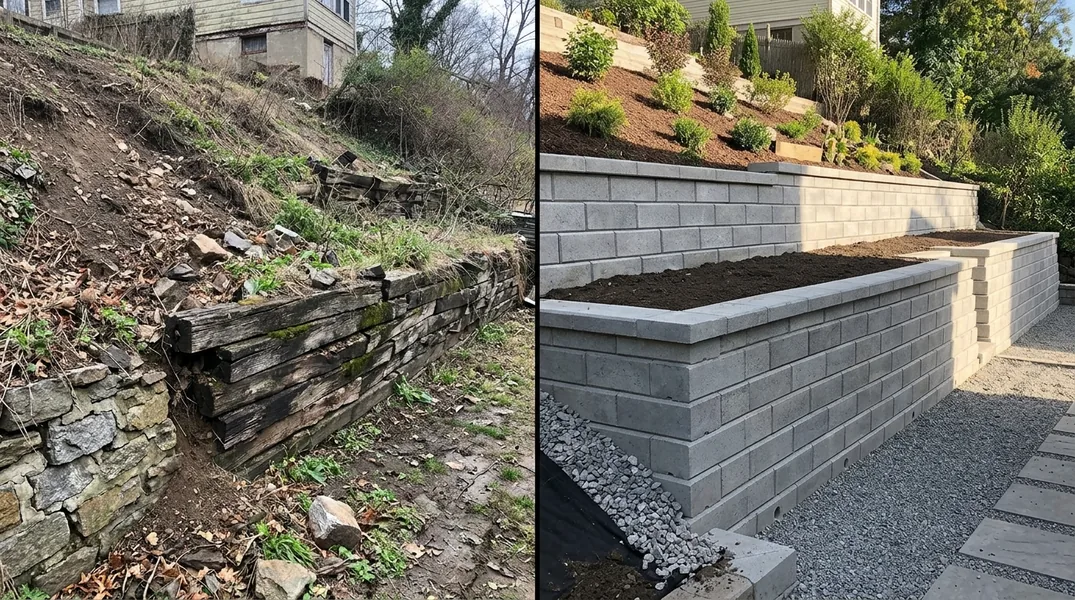
If your existing retaining wall is already showing signs of damage from Nor'easters or freeze-thaw cycles, Retaining Wall Repair may be possible if the damage is caught early. Small cracks can be sealed, and drainage systems can be retrofitted behind existing walls to prevent further deterioration. However, if the wall is severely bowed, tilted, or crumbling, Retaining Wall Replacement becomes the safer and more cost-effective option. Attempting to patch a failing wall is like putting a band-aid on a broken bone. The structural integrity has been compromised, and temporary fixes won't prevent eventual collapse.
The decision between repair and replacement depends on the extent of damage and the wall's age. A wall that is less than half through its expected lifespan and has minor damage might be worth repairing. A wall that is 20 or 30 years old and showing major structural failure should be replaced. When replacing a wall, modern materials like Concrete Retaining Walls offer superior durability and can be installed with integrated drainage systems that protect against future weather damage. This is an investment in decades of protection rather than a short-term patch.
Protecting Your Retaining Wall from Seasonal Weather Damage
Beyond proper drainage installation, several maintenance practices help protect your retaining wall from Nor'easters and freeze-thaw damage. Keep gutters and downspouts clean and directed away from the base of the wall. Ensure that water from your roof and yard slopes away from the structure rather than toward it. If you notice standing water near your wall after heavy rain, that's a sign drainage is inadequate. Seal any visible cracks promptly with concrete crack sealant to prevent water infiltration. These simple steps reduce the amount of water that reaches your wall and the soil behind it.
Regular inspection is your best defense against catastrophic failure. Walk around your property after major storms and during seasonal transitions. Look for new cracks, bowing, tilting, or areas where the wall seems to be moving. Early detection allows you to address problems before they become dangerous. If you're unsure whether your wall needs attention, New York City Retaining Wall offers professional inspections. Call us at (929) 552-6465 or request a free estimate to have a specialist evaluate your wall's condition and recommend appropriate solutions. Don't wait until your retaining wall fails. Take action now to protect your property and ensure safety.
Looking for a professional retaining wall contractor in New York City? New York City Retaining Wall responds fast for all your retaining wall needs.
Get a Free QuoteOur services: Retaining Wall Installation · Retaining Wall Repair · Retaining Wall Replacement