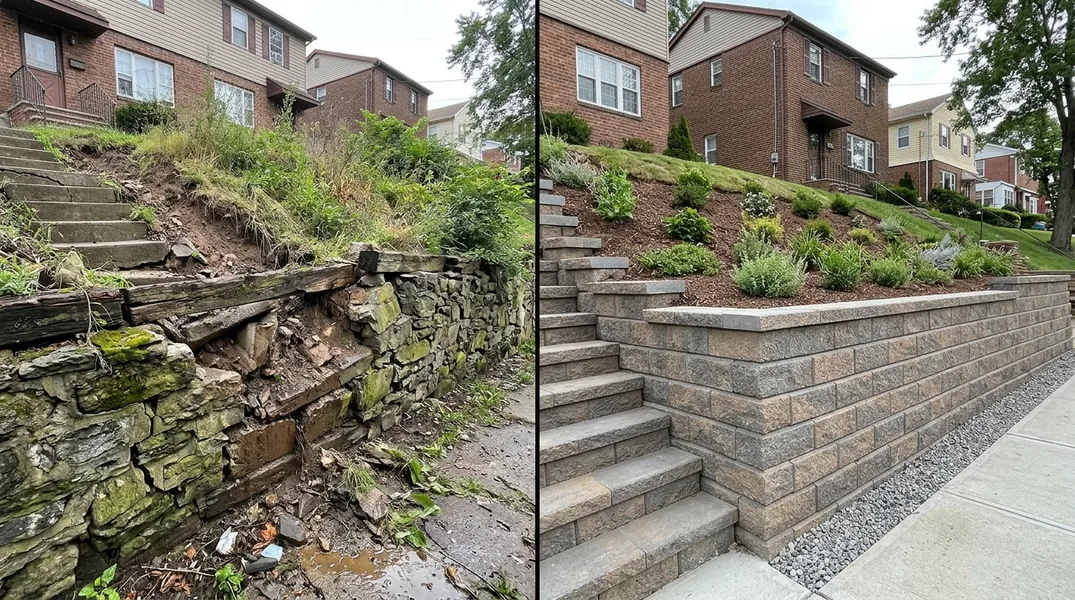
Understanding Frost Heave and Its Impact on Retaining Walls
Winter in New York City brings more than just snow and cold temperatures. The freeze-thaw cycle that occurs during the season can cause significant damage to retaining walls, a phenomenon known as frost heave. When water in the soil behind your wall freezes, it expands, creating tremendous pressure against the wall structure. This expansion and contraction cycle repeats throughout the winter months, gradually pushing your wall outward and upward.
Frost heave is one of the most common causes of leaning retaining walls in the region. As the ice lenses form in the soil, they can lift and shift the wall, creating visible signs of distress like tilting, cracking, and bulging. If you've noticed your retaining wall leaning away from the soil it's meant to contain, frost heave is likely the culprit. The damage can range from minor cosmetic issues to structural failure, depending on the wall's age, construction quality, and drainage conditions.
Signs Your Retaining Wall Has Been Damaged by Frost
Identifying frost heave damage early can help you make informed decisions about whether Retaining Wall Repair or replacement is necessary. The most obvious sign is a noticeable lean or tilt in the wall, where the top moves away from the retained soil. You may also see horizontal or diagonal cracks running through the wall structure, particularly in Concrete Retaining Walls. These cracks often widen over time as the freeze-thaw cycle continues.
Other warning signs include bulging or bowing sections of the wall, gaps appearing between the wall and the soil, and water pooling at the base of the wall. If you notice any of these issues, it's essential to have a professional assessment. The longer you wait, the more expensive the eventual repair or replacement becomes. Many homeowners in Mount Vernon and surrounding areas have found that addressing frost heave damage promptly prevents further deterioration and protects their property.
When Repair Is the Right Choice
Not every frost-heaved wall requires complete Retaining Wall Replacement. If the damage is caught early and the structural integrity remains sound, repair may be a cost-effective solution. Minor cracks, slight leans, and surface damage can often be addressed through targeted repairs that stabilize the wall and prevent further movement. Repairing a wall typically involves improving drainage behind the structure, filling cracks with appropriate sealants, and sometimes adding reinforcement or anchoring systems.
The key to determining whether repair is viable is having a professional evaluate the extent of the damage. A structural engineer or experienced retaining wall contractor can assess whether the wall can be salvaged. Generally, if the wall is still relatively straight, the damage is limited to the surface or minor structural elements, and the foundation is intact, repair is often the better choice economically. Many homeowners find that investing in Retaining Wall Repair now prevents the need for full replacement later, making it a smart long-term investment in their property.
When Replacement Becomes Necessary
Severe frost heave damage sometimes makes replacement the only practical option. If your wall is leaning significantly, has multiple large cracks, or shows signs of structural failure, attempting to repair it may only delay the inevitable. A wall that has been pushed more than a few inches out of plumb, or one where large sections have separated or shifted, is typically beyond economical repair. In these cases, Retaining Wall Replacement provides a fresh start with a properly designed and installed structure that can withstand future freeze-thaw cycles.
Replacement also offers the opportunity to address the underlying issues that contributed to the damage in the first place. A new wall can be built with improved drainage systems, proper grading, and materials suited to New York City's climate. Modern Retaining Wall Installation techniques include better frost protection measures and superior construction methods that weren't available when older walls were built. While replacement is a larger investment upfront, it eliminates ongoing maintenance concerns and provides peace of mind that your property is protected.
Retaining Wall Installation Cost in New York City: What to Budget
The cost of addressing a frost-heaved retaining wall varies significantly depending on whether you choose repair or replacement. Repair work typically costs less than replacement, ranging from a few hundred dollars for minor crack repairs to several thousand for more extensive stabilization work. The exact pricing depends on the wall's size, the extent of damage, accessibility, and the specific repairs needed. Drainage improvements, which are often necessary to prevent future frost heave, add to the overall cost but are essential for long-term durability.
Replacement costs are naturally higher but vary based on the wall's linear footage, height, and the materials chosen. Labor costs in the New York City area are higher than in many other regions, so budget accordingly. Rather than guessing at costs, it's wise to get a professional assessment and detailed quote. New York City Retaining Wall offers a free estimate for both repair and replacement projects, allowing you to compare options and make an informed decision. You can reach us at (929) 552-6465 to schedule an evaluation of your wall.
Preventing Future Frost Heave Damage
Once you've repaired or replaced your retaining wall, taking steps to prevent future frost heave is crucial. The most important factor is proper drainage. Water that accumulates behind your wall is the primary cause of frost heave damage. Installing or improving drainage systems, including perforated drain pipes and gravel backfill, helps water move away from the wall instead of freezing behind it. Proper grading around the wall also directs surface water away from the structure, reducing the moisture that can freeze and expand.
Regular maintenance is equally important. Inspect your wall each spring and fall, looking for new cracks or signs of movement. Clear any debris from drainage areas and ensure water is flowing away from the wall as intended. If you live in an area prone to severe winters, consider consulting with a professional about additional protective measures specific to your property. Whether you've had work done recently or are planning your first Retaining Wall Installation, understanding these prevention strategies will help your wall last for decades.
Looking for a professional retaining wall contractor in New York City? New York City Retaining Wall responds fast for all your retaining wall needs.
Get a Free QuoteOur services: Retaining Wall Installation · Retaining Wall Repair · Retaining Wall Replacement